
GET SOLUTIONS THAT MEET YOUR INDUSTRY NEEDS
Versatile solutions for the special needs of different industries
We’re positioned to fulfil the needs of the local and regional markets
As a result of our unrivaled industry experience and in-depth knowledge, we are able to provide safe and cost-effective industrial equipment for cement factories, industrial equipment for cable productions factories, industrial equipment for chemical production, spare parts for power plants, spare parts for industrial equipment, transmission and distribution equipment.
Get solutions that meet your industry need
Versatile solutions for the special needs of different industries
Cement Factories
Cable Production Factories
Chemical Production
Power Plants
Transmission & Distribution Equipment
Industrial Equipment
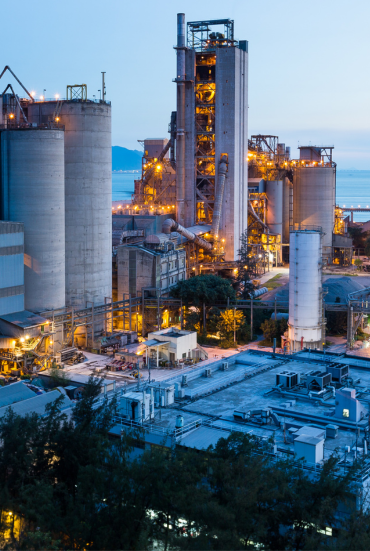
Industrial equipment for cement factories
Industrial equipment plays a crucial role in the operation of cement factories. From the mining of raw materials to the final packaging of cement bags, various equipment and machinery are involved in the production process. One of the most important pieces of equipment in a cement factory is the kiln. The kiln is used to heat and transform raw materials into clinker, which is the main component of cement. Without a properly functioning kiln, the production of cement would not be possible. Additionally, cement factories require crushers and grinding mills to crush and grind raw materials into the fine powder that is used to make cement. These machines require precision engineering and must be able to withstand the harsh conditions of a factory environment. Other important equipment in a cement factory includes conveyors, dust collectors, and storage silos. These machines work together to transport, filter, and store raw materials and finished products. High-quality industrial equipment is crucial for the efficient and safe operation of cement factories. With our industrial equipment for cement factories, the production process would be faster, more efficient, and less dangerous for workers. It is important for cement factories to invest in high-quality equipment and ensure that it is properly maintained to maximize production and ensure the safety of workers.Industrial equipment for cement factories
Industrial equipment plays a crucial role in the operation of cement factories. From the mining of raw materials to the final packaging of cement bags, various equipment and machinery are involved in the production process. One of the most important pieces of equipment in a cement factory is the kiln. The kiln is used to heat and transform raw materials into clinker, which is the main component of cement. Without a properly functioning kiln, the production of cement would not be possible. Additionally, cement factories require crushers and grinding mills to crush and grind raw materials into the fine powder that is used to make cement. These machines require precision engineering and must be able to withstand the harsh conditions of a factory environment. Other important equipment in a cement factory includes conveyors, dust collectors, and storage silos. These machines work together to transport, filter, and store raw materials and finished products. High-quality industrial equipment is crucial for the efficient and safe operation of cement factories. With our industrial equipment for cement factories, the production process would be faster, more efficient, and less dangerous for workers. It is important for cement factories to invest in high-quality equipment and ensure that it is properly maintained to maximize production and ensure the safety of workers.Industrial equipment for chemical production
Chemical production typically involves complex and specialized equipment designed to handle the unique properties of various chemicals. Here are some examples of equipment commonly used in chemical production:- Reactors: Reactors are vessels designed to contain chemical reactions. They come in a variety of shapes and sizes depending on the specific chemical reaction being carried out. Reactors are typically made of materials like stainless steel, glass-lined steel, or other specialized alloys that can withstand the harsh chemicals and high temperatures used in chemical production.
- Mixers: Mixers are used to blend and homogenize chemicals in a reaction vessel. They come in many different types, including paddle mixers, ribbon mixers, and high-shear mixers. The type of mixer used depends on the specific requirements of the chemical reaction being carried out.
- Heat exchangers: Heat exchangers are used to transfer heat between two fluids without mixing them. They are commonly used in chemical production to control the temperature of a reaction vessel. Heat exchangers can be made of various materials, including metals, ceramics, and plastics.
- Distillation columns: Distillation columns are used to separate mixtures of chemicals based on their boiling points. They work by heating the mixture to a specific temperature and then condensing the vapors that are produced. Distillation columns can be very large and complex, with multiple trays or packing materials designed to maximize separation efficiency.
- Storage tanks: Chemical production often involves storing large quantities of chemicals before they are processed further. Storage tanks are typically made of materials like carbon steel, stainless steel, or fiberglass, depending on the specific chemical being stored.
- Pumps: Chemical production often involves moving large quantities of chemicals between various pieces of equipment. Pumps are used to transfer fluids from one vessel to another. There are many different types of pumps used in chemical production, including centrifugal pumps, diaphragm pumps, and positive displacement pumps.
High-quality spare parts for power plants, industrial equipment, transmission and distribution equipment
The quality of industrial spare parts is crucial to ensuring reliable and efficient operations. Here are some reasons why the quality of spare parts is important:- Reliability: High-quality spare parts are designed and manufactured to meet the specific requirements of industrial equipment, ensuring a reliable and consistent performance. Inferior quality parts may not fit correctly or may not meet the necessary specifications, leading to equipment failure and costly downtime.
- Safety: Power plants, for example, operate at high temperatures and pressures, making it important to use high-quality spare parts that are designed to withstand these conditions. Poor-quality parts may not be able to handle the stress and can result in equipment failure or even safety hazards.
- Efficiency: High-quality spare parts can help improve the efficiency of plant operations by ensuring that equipment is operating optimally. For example, high-quality bearings and other mechanical components can reduce friction, which can help to increase the efficiency of equipment and reduce energy consumption.
- Cost-effectiveness: While high-quality spare parts may come with a higher initial cost, they can ultimately be more cost-effective in the long run. High-quality parts are more durable and reliable, which can help to reduce overall maintenance costs and minimize downtime.